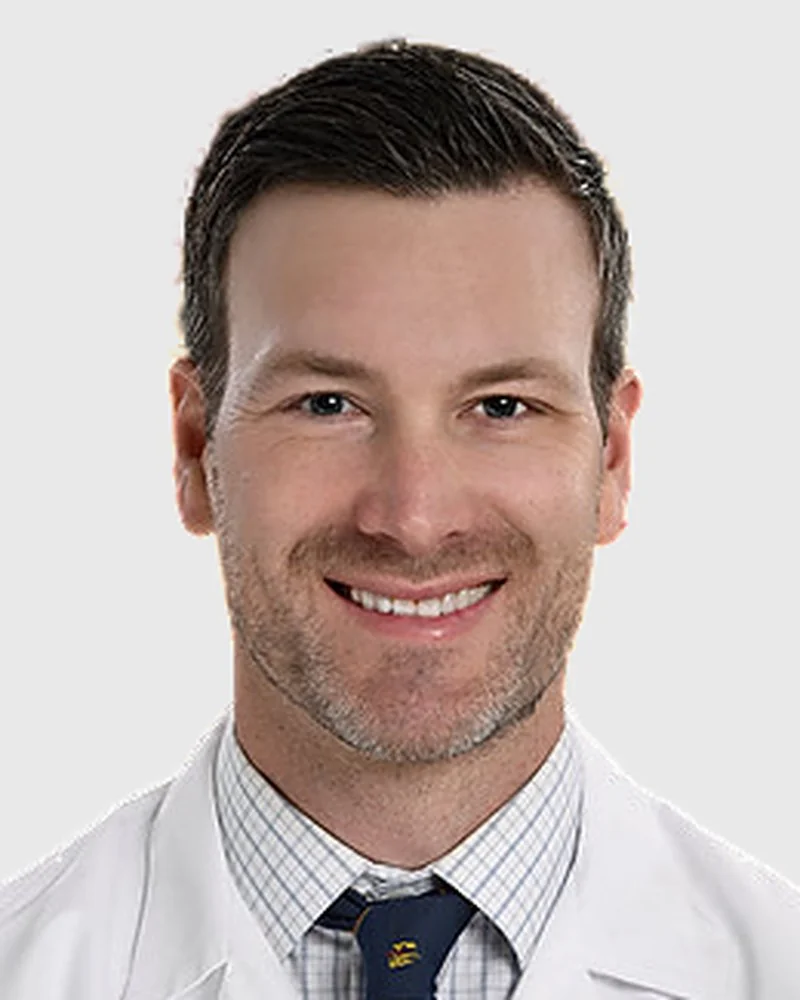
Residency & Fellowship Trained at Hospital for Special Surgery — the Nation’s #1 Orthopedic Hospital · Board Certified (ABOS)
Subspecialty-trained shoulder, knee, and sports medicine care in the Lehigh Valley. Residency and fellowship at Hospital for Special Surgery — the nation’s #1 ranked orthopedic hospital — prior faculty at Mayo Clinic, former NFL New York Giants team physician, and current team physician for the Reading Royals and Lehigh Valley IronPigs.
Shoulder, Knee & Sports Medicine Specialist
Bethlehem • Kutztown • Lehigh Valley
Dr. Michael D. Hendel, MD, PhD, is a board-certified orthopedic surgeon and Assistant Professor of Orthopedic Surgery at St. Luke’s University Health Network. He completed both his residency and his fellowship in Sports Medicine & Shoulder Surgery at Hospital for Special Surgery in New York — ranked the nation’s #1 orthopedic hospital by U.S. News & World Report for more than 14 consecutive years.
He served as Assistant Team Physician for the NFL New York Giants (2017–2018) and spent five years on faculty at the Mayo Clinic College of Medicine (2018–2023), where he also served as Research and Education Chair (2019–2023), before returning to the Lehigh Valley. He remains on the sidelines today as team physician for the Reading Royals (ECHL professional hockey), the Lehigh Valley IronPigs (Triple-A baseball), and Liberty & Freedom High School football (PIAA District XI), and serves as tournament physician for the PIAA State Wrestling Tournament.
Dr. Hendel holds a PhD in Cardiac Physiology from the University of Minnesota, completed a postdoctoral fellowship there, and earned his MD from the Cleveland Clinic Lerner College of Medicine on a full academic scholarship. He has authored 18 peer-reviewed publications in journals including JBJS, JSES, American Journal of Physiology, and Clinical Orthopaedics and Related Research, plus three book chapters in ISAKOS ACL Surgery. He is a reviewer for the American Journal of Sports Medicine and the HSS Journal, and a member of AAOS, AOSSM, the Orthopaedic Research Society, and the American Physiological Society.

Bethel University, St. Paul, MN

University of Minnesota · American Heart Association Pre-Doctoral Fellow · Postdoctoral Fellowship 2006–2007

Cleveland Clinic Lerner College of Medicine · Full Academic Scholarship

Hospital for Special Surgery, New York

Hospital for Special Surgery, New York
NFL New York Giants — Asst. Team Physician
Assistant Professor of Orthopedic Surgery · Research and Education Chair (2019–2023)

Assistant Professor of Orthopedic Surgery · Bethlehem, PA · Team Physician: Reading Royals (ECHL), Lehigh Valley IronPigs (AAA), Liberty & Freedom HS Football, PIAA State Wrestling
● Currently Accepting New PatientsResidency and fellowship trained at Hospital for Special Surgery — the nation’s #1 orthopedic hospital — with subspecialty expertise in the shoulder and knee injuries that keep athletes off the field.
Former NFL New York Giants team physician — today on the sidelines for the Reading Royals, Lehigh Valley IronPigs, and PIAA District XI football and wrestling. The same doctor the pros see is the one you see.
MD-PhD physician-scientist with 18 peer-reviewed publications, ISAKOS book chapters, and reviewer roles for the American Journal of Sports Medicine and HSS Journal. Former Research & Education Chair at Mayo Clinic.
Conservative options first, imaging reviewed with you, and a written milestone-based recovery plan for every surgical patient — care aligned with your goals, not a template.
In-depth guides written to help you understand your diagnosis and make informed decisions about your care.
Subspecialty-trained expertise in shoulder reconstruction, knee sports medicine, shoulder arthroplasty, and orthopedic trauma.
Arthroscopic repair using suture anchors with single- or double-row fixation, tailored to tear size and tissue quality.
Arthroscopic stabilization for recurrent anterior shoulder instability; bone loss addressed with Latarjet when indicated.
Repair of superior labrum anterior-posterior lesions with modern suture anchor techniques, or biceps tenodesis when appropriate.
Open subpectoral or arthroscopic reattachment of the long head of biceps to relieve bicipital groove pain.
Coracoid transfer for recurrent instability with significant glenoid bone loss, restoring stability for contact athletes.
Arthroscopic decompression and AC joint treatment, often combined with rotator cuff repair.
Arthroscopic reconstruction using BTB, hamstring, or quadriceps tendon autograft with rigid fixation and milestone-based rehab.
Tissue-preserving arthroscopic repair — prioritized over meniscectomy in appropriate candidates to protect the joint long-term.
Outpatient arthroscopic treatment for irreparable tear patterns with an accelerated return to activity.
Osteochondral autograft transfer and cell-based cartilage restoration for focal articular defects, preserving the native joint.
Complex reconstruction of the posterior cruciate and associated ligaments for combined knee instability.
Image-guided corticosteroid, hyaluronic acid, and PRP injections for knee osteoarthritis and soft tissue pathology.
Total shoulder replacement for end-stage glenohumeral osteoarthritis with an intact rotator cuff.
Reverse configuration for cuff tear arthropathy, massive irreparable tears, and complex proximal humerus fractures.
Humeral head replacement for displaced 3- and 4-part proximal humerus fractures in appropriate patients.
Complex revision of failed anatomic or reverse replacements with component exchange and bone grafting.
Specialized techniques for posterior glenoid bone loss — Dr. Hendel has published on this topic in the American Journal of Orthopedics.
CT-guided custom instruments for optimal glenoid component positioning — published randomized trial in JBJS.
Bimalleolar, trimalleolar, and Weber B/C fractures. Anatomic reduction with plate and lag-screw fixation for stable, reliable outcomes.
ORIF with locking plates, or hemiarthroplasty / reverse TSA for displaced fractures in older patients.
Minimally invasive intramedullary nailing with early weight-bearing and rapid rehabilitation.
Superior plate fixation of displaced midshaft clavicle fractures.
Arthroscopic-assisted reduction and fixation of tibial plateau fractures to restore the joint surface.
Conservative management of stable fractures with reduction, immobilization, and structured follow-up.
Select a condition to review causes, symptoms, treatment options, and recovery expectations.
Procedure-specific rehabilitation guidelines with phase-based progressions, activity restrictions, and objective milestones. Protocols may be modified based on individual surgical findings and patient factors.
Dr. Hendel is on the sidelines every season — currently serving as team physician for professional, minor-league, and scholastic programs across the region.
18 peer-reviewed publications and 3 book chapters in JBJS, JSES, American Journal of Physiology, Clinical Orthopaedics and Related Research, and other leading journals. Click any publication to view it on PubMed.
Weiss LJ, Wang D, Hendel M, Buzzerio P, Rodeo SA. Curr Rev Musculoskelet Med. 2018;11(1):102-112.
View on PubMed ↗ Peer-Reviewed · Shoulder SurgerySurgical Anatomy of the Radial Nerve in the Deltopectoral Approach for Revision Shoulder Arthroplasty and Periprosthetic Fracture FixationFu MC, Hendel MD, Chen X, Warren RF, Dines DM, Gulotta LV. J Shoulder Elbow Surg. 2017;26(12):2173-2176.
View on PubMed ↗ Peer-Reviewed · Shoulder SurgeryDr. Charles Neer’s Last Surgical Case: A Historical PerspectiveCordasco FA, Wessel LE, Hendel MD, Ticker JB. J Shoulder Elbow Surg. 2016;25(11):e358-e364.
View on PubMed ↗ Peer-Reviewed · Shoulder ArthroplastyManagement of the Biconcave (B2) Glenoid in Shoulder Arthroplasty: Technical ConsiderationsHendel MD, Werner BC, Camp CL, Gulotta LV, Walch G, Dines DM, Dines JS. Am J Orthop (Belle Mead NJ). 2016;45(4):220-227.
View on PubMed ↗ Peer-Reviewed · Glenohumeral OAIs Premorbid Glenoid Anatomy Altered in Patients with Glenohumeral Osteoarthritis?Ricchetti ET, Hendel MD, Collins DN, Iannotti JP. Clin Orthop Relat Res. 2013;471(9):2932-2939.
View on PubMed ↗ Peer-Reviewed · Randomized Controlled TrialComparison of Patient-Specific Instruments with Standard Surgical Instruments in Determining Glenoid Component Position: A Randomized Prospective Clinical TrialHendel MD, Bryan JA, Barsoum WK, Rodriguez EJ, Brems JJ, Evans PJ, Iannotti JP. J Bone Joint Surg Am. 2012;94(23):2167-2175.
View on PubMed ↗ Peer-Reviewed · Cardiovascular PhysiologyRoles of the Subfornical Organ and Area Postrema in Arterial Pressure Increases Induced by 48-h Water Deprivation in Normal RatsCollister JP, Nahey DB, Hendel MD, Brooks VL. Physiol Rep. 2014;2(1):e00191.
View on PubMed ↗ Peer-Reviewed · Cardiovascular PhysiologyThe Role of the Subfornical Organ in Angiotensin II–Salt Hypertension in the RatOsborn JW, Hendel MD, Collister JP, Ariza-Guzman PA, Fink GD. Exp Physiol. 2012;97(1):80-88.
View on PubMed ↗ Peer-Reviewed · Renal PhysiologyRenal Denervation Attenuates Long-Term Hypertensive Effects of Angiotensin II in the RatHendel MD, Collister JP. Clin Exp Pharmacol Physiol. 2006;33(12):1225-1230.
View on PubMed ↗ Peer-Reviewed · Cardiovascular PhysiologyEffect of Subfornical Organ Lesion on the Development of Mineralocorticoid-Salt HypertensionOsborn JW, Jacob F, Hendel M, Collister JP, Clark L, Guzman PA. Brain Res. 2006;1109(1):74-82.
View on PubMed ↗ Peer-Reviewed · Cardiovascular PhysiologyRole of the Subfornical Organ in Angiotensin-Induced HypertensionHendel MD, Collister JP. Am J Physiol Heart Circ Physiol. 2005;289(1):H392-402.
View on PubMed ↗ Peer-Reviewed · Cardiovascular PhysiologySodium Balance, Arterial Pressure, and the Role of the Subfornical Organ During Chronic Changes in Dietary SaltHendel MD, Collister JP. Am J Physiol Heart Circ Physiol. 2005;289(1):H426-431.
View on PubMed ↗ Peer-Reviewed · Cardiovascular PhysiologyContribution of the Subfornical Organ to Angiotensin II–Mediated Drinking and Blood Pressure RegulationHendel MD, Collister JP. Clin Exp Pharmacol Physiol. 2005;32(5-6):467-474.
View on PubMed ↗ Peer-Reviewed · Cardiovascular PhysiologyChronic Effects of Angiotensin II and AT1 Receptors in the Subfornical OrganHendel MD, Collister JP. Clin Exp Pharmacol Physiol. 2005;32(5-6):462-466.
View on PubMed ↗ Peer-Reviewed · Cardiovascular PhysiologyContribution of the Subfornical Organ to Angiotensin II–Mediated Drinking and Blood Pressure RegulationHendel M, Collister JP. Am J Physiol Regul Integr Comp Physiol. 2005;288:R1004-R1009.
View on PubMed ↗Hendel MD, Collister JP. Am J Hypertens. 2005;18:A209.
Collister JP, Hendel MD. J Renin Angiotensin Aldosterone Syst. 2003;4(4):207-212.
View on PubMed ↗ Peer-Reviewed · HypertensionRole of the Subfornical Organ in the Chronic Hypotensive Response to Losartan in Normal RatsCollister JP, Hendel MD. Hypertension. 2003;41(3):576-582.
View on PubMed ↗Gulotta LV, Hendel MD. In: Let’s Discuss Revision Shoulder. 2015.
Liu JN, Hendel MD, Marx RG. In: ISAKOS ACL Surgery. 2015.
Hendel MD, Liu JN, Marx RG. In: ISAKOS ACL Surgery. 2015.
Hendel MD, Buller LT, Barsoum WK, Iannotti JP. Cleveland Clinic Orthopaedic Insights. 2011.
Buller LT, Hendel MD, Barsoum WK, Iannotti JP. Cleveland Clinic Orthopaedic Insights. 2011.
Dr. Hendel’s practice is built on clear communication, honest recommendations, and outcomes you can verify for yourself.
Your imaging reviewed with you, every option explained, and time for all of your questions.
Surgery is recommended only when it is the right answer — most conditions start with conservative care.
Every surgical patient leaves with a written, milestone-based rehabilitation protocol.
“Dr. Hendel did a wonderful job saving my ACL and repairing my menisci. His expertise will have me returning to all of my sports much quicker than I expected — skiing, tennis, and mountain biking.”
Press Ganey verified survey · August 2026 ★★★★★“The doctor was so very kind and took great care to fix my problem. It was like a miracle that I am totally pain free now!!”
Press Ganey verified survey · August 2026 ★★★★★“I constantly brag to friends and family about how happy I switched to St. Luke’s and to Michael Hendel, MD. It was the best decision of my life.”
Press Ganey verified survey · December 2025 ★★★★★“Dr. Hendel took the time to listen to me, and explained everything in detail. I didn’t have any questions leaving. Great experience!”
Press Ganey verified survey · July 2026 ★★★★★“They are the very best in their field, and I can say that after having many, many surgeries (80 surgeries so far)… I've never had a bad interaction with anyone from their office or surgical teams.”
Press Ganey verified survey · March 2026 ★★★★★“What a GREAT appointment. Dr. explained everything in a way a person could understand… best aftercare report I ever received.”
Press Ganey verified survey · March 2026Reviews are collected and published by the platforms above and reflect individual patient experiences; they are not a guarantee of outcome.
Referral requirements vary by insurance plan. Many plans allow direct access to orthopedic specialists, while others require a referral from your primary care physician. Our office staff can verify your specific plan requirements when you call to schedule at (484) 526-1735.
Recovery follows a structured, milestone-based protocol: independent walking by 4–6 weeks, jogging at 3–4 months, sport-specific training at 5–6 months, and return to competition at 8–12 months. Dr. Hendel monitors objective criteria at each stage before advancing activity. Individual timelines vary based on graft selection, sport demands, and biological healing.
Yes. Non-operative management is the first line of treatment for the majority of musculoskeletal conditions — physical therapy, corticosteroid and hyaluronic acid injections, PRP therapy, bracing, and activity modification. Surgery is discussed only when conservative treatment has not achieved adequate improvement or when the injury warrants operative management for the best functional outcome.
HSS has been ranked the #1 orthopedic hospital in the United States by U.S. News & World Report for over 14 consecutive years, with one of the highest surgical volumes in the country and subspecialty-focused faculty. Dr. Hendel completed both his five-year residency and his sports medicine fellowship at HSS — a depth of training at a single elite institution that is uncommon among surgeons practicing in the region.
New patient consultations are typically available within one to two weeks, and acute injuries and fractures can often be accommodated within 24–48 hours — same-day appointments are often available when Dr. Hendel is in the office. Call (484) 526-1735, schedule online through St. Luke’s, or submit a request through the form below. Please bring any existing imaging (X-rays, MRI) to your appointment.
Yes. Dr. Hendel evaluates and treats athletes across all age groups. Injuries in pediatric and adolescent patients require particular attention to skeletal maturity and growth plate status — his sports medicine fellowship training and professional-athlete experience ensure a high standard of care at every age and competition level.
Dr. Hendel participates with most major carriers through St. Luke’s University Health Network, including Aetna, Blue Cross Blue Shield/Highmark, Cigna, Geisinger Health Plan, Medicare, United Healthcare/Optum, TRICARE, and Workers’ Compensation. Please contact our office to confirm coverage and authorization requirements for your specific plan.