Shoulder Surgery in Bethlehem & the Lehigh Valley
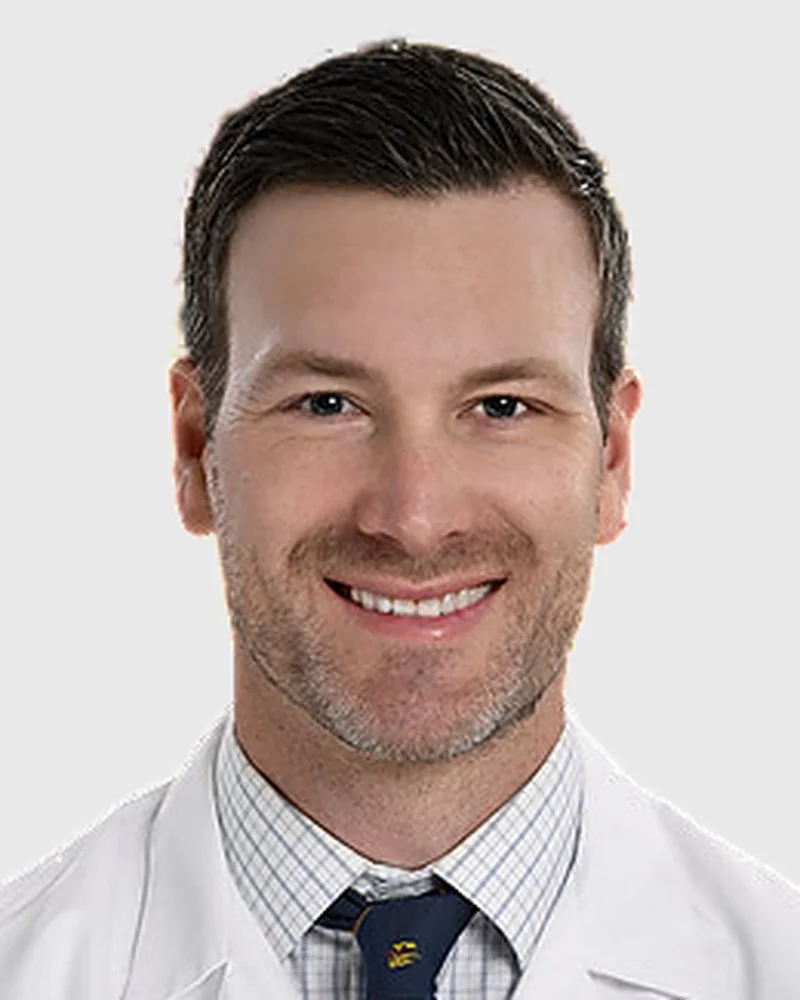
Shoulder pain can make it hard to sleep, reach overhead, lift, or keep playing your sport. Dr. Michael Hendel, MD, PhD completed his residency and a dedicated Sports Medicine & Shoulder Surgery fellowship at Hospital for Special Surgery, and he treats the full range of shoulder problems, from rotator cuff tears and dislocations to arthritis and fractures. Care starts with non-surgical treatment whenever it fits your problem. When surgery is the right step, this page explains the procedures he performs, who each one is for, and what recovery generally looks like.
Office visits are in Bethlehem, and surgery is performed at St. Luke's Orthopedic Hospital — West End Campus in Allentown.
Arthroscopic Rotator Cuff Repair
- What it treats: torn rotator cuff tendons, the group of tendons that lift and rotate the arm. Using small incisions and a camera, the torn tendon is reattached to the bone with suture anchors (single- or double-row, depending on the tear). For massive tears, options include advanced repair techniques and superior capsular reconstruction.
- Who it's for: patients with full-thickness tears, significant weakness, or pain that has not improved with several weeks of conservative care.
- Recovery outline: a sling protects the repair for about 2 to 4 weeks while motion is restored gradually, followed by strengthening and a step-by-step return to activity. Larger tears generally take longer. See the rotator cuff repair page for more detail.
Subacromial Decompression & AC Joint Treatment
- What it treats: impingement, where the rotator cuff is pinched under the bony roof of the shoulder, and pain from the AC (acromioclavicular) joint at the top of the shoulder. The procedure is done arthroscopically to create more room for the tendons.
- Who it's for: patients whose impingement or AC joint pain persists despite therapy and injections. It is often combined with rotator cuff repair.
- Recovery outline: outpatient surgery with early motion. When it is combined with a rotator cuff repair, the repair's protection and rehabilitation timeline applies.
Biceps Tenodesis
- What it treats: pain from the long head of the biceps tendon where it runs through the front of the shoulder. The tendon is reattached in a new position, through an open subpectoral or an arthroscopic approach.
- Who it's for: patients with biceps tendon pain at the front of the shoulder, and selected patients with SLAP tears or rotator cuff problems where the biceps is contributing to pain.
- Recovery outline: a sling for comfort and protection early on, a gradual return of motion, and a delay before heavy lifting with the arm while the tendon heals.
Arthroscopic Bankart Repair (Shoulder Stabilization)
- What it treats: recurrent anterior shoulder instability, when the ball slips out the front of the socket and tears the labrum (the cartilage rim that deepens the socket). The torn labrum is reattached to the socket rim with small suture anchors, and the stretched capsule is tightened.
- Who it's for: patients with repeat dislocations or a significant labral tear and minimal bone loss, especially younger athletes in contact or overhead sports.
- Recovery outline: typically outpatient surgery, a sling for the first several weeks, then progressive motion and strengthening in physical therapy. Return to sport is based on milestones rather than the calendar alone. Learn more about shoulder instability and labral repair.
Latarjet Procedure
- What it treats: shoulder instability with significant glenoid (socket) bone loss. A small piece of bone, the coracoid, is transferred with its attached tendon to the front of the socket to restore its width and add support.
- Who it's for: patients whose repeated dislocations have worn away part of the socket, patients after a failed prior Bankart repair, and selected collision athletes.
- Recovery outline: a sling early on, then structured rehabilitation. Return to sport also depends on confirmation of bone healing on imaging.
SLAP Repair
- What it treats: SLAP tears, which are tears of the upper labrum where the biceps tendon anchors. The labrum is repaired with modern suture anchor techniques, or a biceps tenodesis is performed when that is the better option.
- Who it's for: throwing and overhead athletes and active adults whose SLAP tear symptoms continue despite therapy. Many SLAP tears improve without surgery.
- Recovery outline: a period of sling protection, then a gradual return of motion and strength. Overhead athletes often need a longer, graduated throwing progression.
Shoulder Arthroscopy
- What it treats: a range of problems inside the shoulder joint, evaluated and treated through small incisions with a camera. Arthroscopy is the approach used for many of the procedures on this page.
- Who it's for: patients whose examination and imaging point to a problem inside the joint that has not improved with conservative care.
- Recovery outline: most arthroscopic shoulder procedures are outpatient, so you go home the same day. Recovery depends on what is repaired or treated during the procedure.
Anatomic Total Shoulder Replacement
- What it treats: end-stage shoulder arthritis (glenohumeral osteoarthritis) with an intact rotator cuff. The worn ball and socket are resurfaced to restore the shoulder's natural mechanics. Dr. Hendel has published research on positioning the socket (glenoid) component, including a randomized trial in the Journal of Bone & Joint Surgery, and technique work on the challenging biconcave (B2) glenoid.
- Who it's for: patients whose X-rays show advanced arthritis and whose pain limits sleep and daily function despite injections, therapy, and medication.
- Recovery outline: a sling with protected motion for the first weeks, then active motion and later strengthening. Many patients notice their arthritis pain improve relatively early. Most return to low-impact activities such as walking, swimming, and golf.
Reverse Total Shoulder Replacement
- What it treats: cuff tear arthropathy (arthritis together with rotator cuff failure), massive irreparable rotator cuff tears, and complex proximal humerus fractures. The ball-and-socket geometry is reversed so the deltoid muscle can power the arm without a working rotator cuff.
- Who it's for: patients whose rotator cuff is beyond repair, or who have both arthritis and cuff failure.
- Recovery outline: a sling with protected motion early on, with certain arm positions limited in the first weeks, followed by a gradual return of motion and function under a written protocol.
Hemiarthroplasty for Fracture
- What it treats: displaced 3- and 4-part fractures of the proximal humerus (the top of the arm bone). The broken humeral head is replaced.
- Who it's for: appropriate patients with complex proximal humerus fractures. For some patients, a reverse shoulder replacement is the better choice.
- Recovery outline: a period of sling protection while the bone around the implant heals, then gradual motion and strengthening with physical therapy.
Revision Shoulder Replacement
- What it treats: painful or failed prior anatomic or reverse shoulder replacements. Revision can involve exchanging components and bone grafting. Dr. Hendel has co-authored a book chapter on reverse arthroplasty for failed anatomic shoulder arthroplasty.
- Who it's for: patients with ongoing pain, instability, or loss of function after a previous shoulder replacement.
- Recovery outline: similar in structure to a first-time replacement, protection first, then motion, then strengthening, with the plan tailored to what the revision involved.
Proximal Humerus Fracture Fixation
- What it treats: fractures of the top of the arm bone near the shoulder. Displaced fractures can be fixed with a locking plate and screws (ORIF).
- Who it's for: patients with displaced proximal humerus fractures where fixation is the best way to restore the shoulder. For displaced fractures in older patients, hemiarthroplasty or reverse shoulder replacement may be recommended instead.
- Recovery outline: sling protection while the fracture heals, gentle early motion as directed, and progressive therapy once healing allows.
Clavicle Fracture Fixation
- What it treats: displaced fractures of the middle of the collarbone (clavicle), fixed with a plate along the top of the bone.
- Who it's for: patients with displaced midshaft clavicle fractures when surgical fixation is recommended after reviewing the X-rays.
- Recovery outline: a sling for comfort early on, a gradual return of motion, and a return to sport once the bone has healed and strength has returned.
Every surgical patient receives a written, milestone-based rehabilitation protocol, so you and your physical therapist always know where you are and what comes next. For a phase-by-phase look at the weeks after surgery, read the shoulder surgery recovery guide, and for arthritis and replacement options, see the shoulder replacement page.